


We develop the best technologies for recycling materials to find innovative solutions for the energy and ecological transition
STOKKERMILL | SELTEK SRL © 2023 | P. Iva. IT02360630301 | Privacy | Terms










Dismantling is not recycling. It is theater.
Ever since the recycling industry began, the same alternative has existed: shred and separate, or dismantle piece by piece. It is not a new debate, and it was settled long ago—not around a conference table, but in the field.
In recent years, separation technologies have made a leap that would have seemed like science fiction twenty years ago. Reliable, repeatable mechanical separation on an industrial scale. High-precision optical separation, unthinkable until recently. Today, X-ray systems combined with optical sorting read the atomic density of a fragment in real time and direct it to the correct stream without any human eye ever examining it.
No one has invested decades of research and development in this direction on a technological whim. It happened because the industry reached a conclusion that is as uncomfortable as it is sound: dismantling materials as a scalable industrial process is essentially impracticable. And this is true for two structural, indisputable reasons.
First: no product currently in circulation was designed to be recycled or dismantled. Some will object that ecodesign and extended producer responsibility regulations exist precisely to require manufacturers to consider end of life. True, they exist, and they have not always produced the intended result. But that is not even the decisive point. The decisive point is time, and there is no room for debate here: a photovoltaic panel, a car, or a household appliance reaching end of life today was designed 20, often 30 years ago, when none of these regulations existed. What manufacturers will do from tomorrow onward, with which materials and under which constraints, is an entirely new chapter: perhaps something will change, perhaps not. But it does not alter the nature of the stream arriving in the yard today by a single millimeter: designed to function and cost less, not to be disassembled.
Second: what reaches the recycler is never a single, standardized product. It is heterogeneous by definition, and the decisive variable is not even damage—it is variety. Take a car: no two models have the same arrangement of bolts, clips, bonded joints, and wiring. Every manufacturer, every model, and every version of the same model in the same year changes the internal geometry. Building a robotic dismantling line would mean building one for every model-version-year combination—an economic absurdity before it is even a technical one. A visit to an auto dismantler is enough to verify this in person: only components with a resale market are recovered by hand—an engine, a door, a headlamp—not because an industrial dismantling line exists, but because the resale value of that individual part justifies the manual work. Everything else is shredded and separated, as expected. Accident or fire damage is merely an aggravating factor; the fundamental problem is that no one can afford to recycle “that model and that version of that model” as a dedicated process. The same applies, on a different scale, to a laser printer or a smartphone.
The same is true of electrical cable, and here we are talking about a process we know from the inside, not by hearsay. A cable can be stripped with a pair of scissors: technically true, and almost everyone has done it at least once. Then what? A plant required to process tons of heterogeneous cable—different cross-sections, different insulation materials, and different alloys—cannot be based on a manual action repeated indefinitely. The material is shredded and separated by eddy currents, density, and optical sorting. It is exactly the same logic as for a photovoltaic panel, smartphone, or car: the technical feasibility of a manual operation is never, in itself, proof of industrial scalability.
To make dismantling genuinely efficient on an industrial scale, the upstream manufacturing logic would have to change and the downstream recycling infrastructure would have to be rebuilt from scratch. This is not a technical adjustment: it is a system redesign that no sector has ever completed and that no business plan can afford to wait for.
For a photovoltaic panel, the objection is only partly valid, and that part must be isolated rigorously because this is where the misunderstanding lies. Yes, a panel can be dismantled, and this is a real operation, not a trade-show hypothesis. The aluminum frame can be removed with an industrial deframer, and the value of the recovered aluminum makes the operation economically viable. The result is a profile with residual traces of glass and plastic—not the highest possible valorization, but a result that stands up economically. The same applies to delamination: a controlled heating cycle also removes the glass, producing a “mat”—the cell-EVA-backsheet sandwich—ready for sale downstream. We do this too in our entry-level lines.
The question is not whether these processes work. They do. The question is at what scale they work, and this is where the narrative of dismantling as a universal solution ceases to hold. A deframer or delamination cycle processes 30–50 panels per hour, no more, and only standard, physically intact modules: broken, bifacial, or non-standard panels fall outside the operating range. These are appropriate solutions for companies entering the supply chain with calibrated investment and limited volumes. They are not, and cannot become, the model for treating an industrial-scale end-of-life stream.
Beyond this threshold, the nature of the problem changes. Expecting dismantling or delamination to produce a clean, uncontaminated glass fraction at higher volumes is a promise, not a guaranteed outcome. Beneath the glass there is not a collection of components waiting to be separated one by one: there is a laminate. Cells, EVA, and backsheet are hot-pressed, typically at 140–150°C under vacuum for 10–15 minutes, into a single block, with the explicit technical purpose of cross-linking the EVA and turning it into a permanent adhesive capable of keeping the sandwich watertight through 25–30 years of exposure to weather, UV radiation, and thermal cycling.
This is not a negligible construction detail: it is the design objective. A panel that delaminates by itself after a few years is a panel that has failed in its function. Asking the same laminate—deliberately built to withstand three decades of sun and rain—to separate easily by hand on an industrial scale is asking the product to contradict its own engineering. This is not an operator limitation; it is a physical and chemical constraint of the material. That is precisely why attempts to force this separation beyond small scale—hot knife and laser cutting—remain slow (8–20 panels per hour), energy-intensive, unable to accept already broken panels, and, ultimately, still return glass contaminated with EVA residue. The “miracle” of clean glass at industrial volumes, whether by manual or thermal means, simply never occurs.
This is why the correct question is not “can it be done?” but “where is this process efficient, and at what scale does it remain viable?” For the laminate—the part that truly matters, not the frame—the answer is: only up to a certain point, then nowhere.
Anyone presenting dismantling as the frontier of innovation in photovoltaic recycling without distinguishing the scale involved is, at best, ignoring thirty years of separation engineering already proven on streams far more complex than a solar panel. The end-of-life vehicle sector treats hundreds of different materials in much more heterogeneous conditions and achieves extremely high recovery rates precisely through size reduction and multi-technology separation. At worst, it is selling theater: spectacular robotic arms designed for trade-show display, calibrated for intact monofacial panels that are rarely seen in a real recycling yard, while remaining silent about throughput figures.
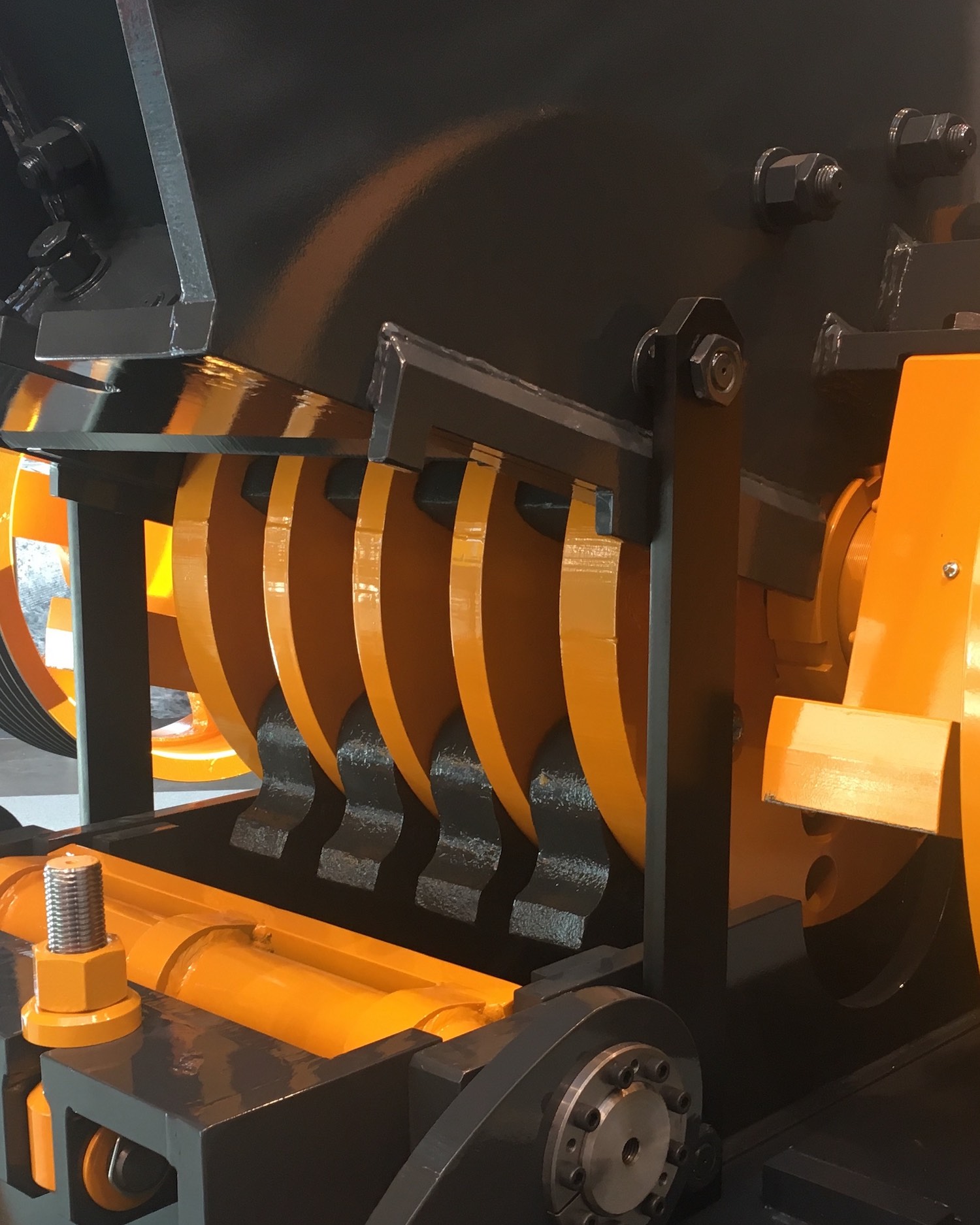
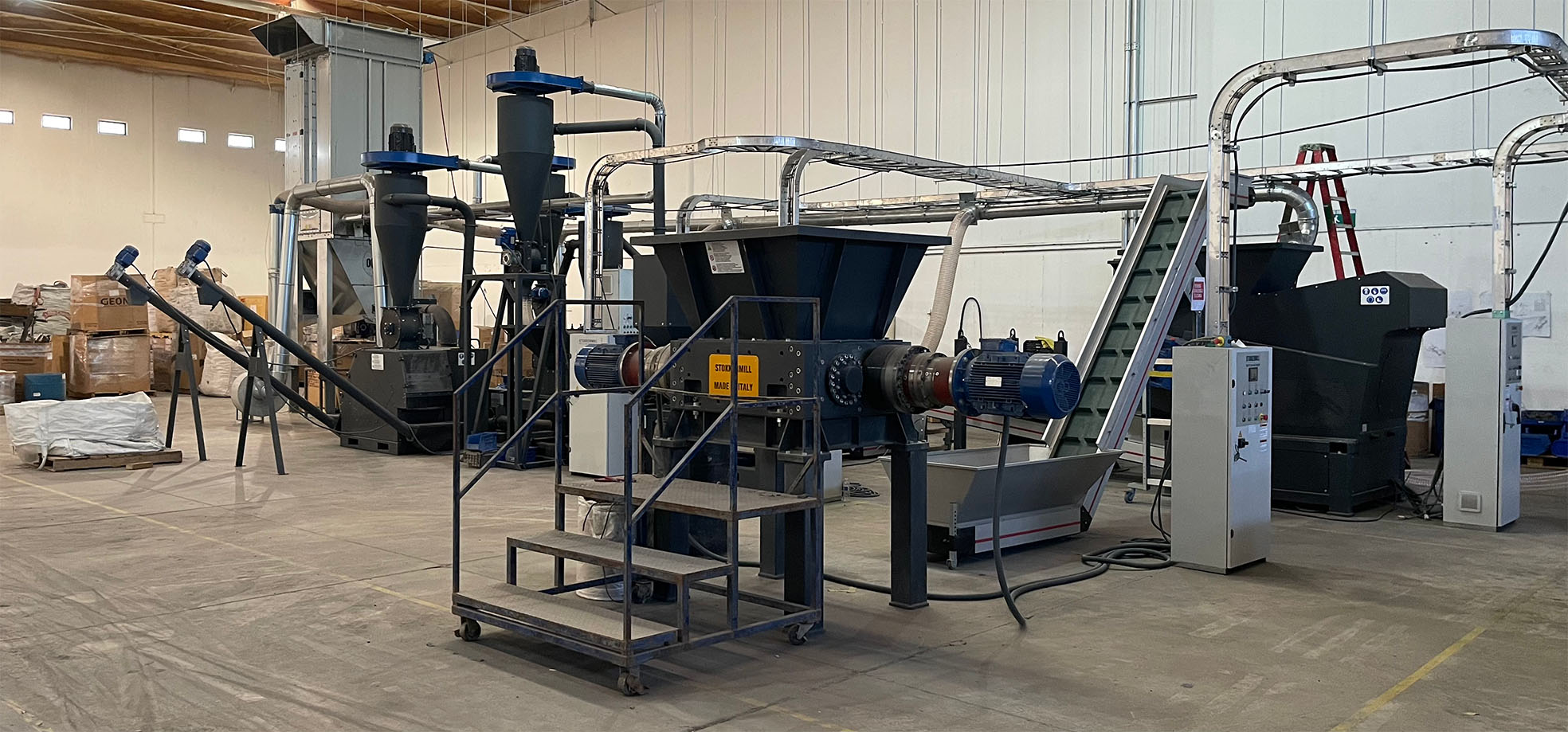
Industrial recycling is not a production line run backward, and adding automation to a fundamentally flawed idea will not make it one. It is physics applied to a heterogeneous stream: size reduction brings the material to a workable size, followed by a sequence of magnetic, eddy-current, NIR optical, and X-ray separators, each specialized in a different physical principle. This is what genuinely builds purity, at any volume and with panels in any input condition.
It must be said just as clearly that not all these technologies are always necessary. An NIR optical sorter or X-ray system makes sense when the downstream market requires—and pays for—a very high purity level: when an industry is prepared to state explicitly, “glass at those quality specifications is worth this amount.” One of the fundamental principles of material recycling is that purity must be what the outlet market requires: no more and no less. Absolute purity, which may seem an unquestionable objective to those outside the sector, is often merely an additional energy and environmental cost that no buyer is willing to reward. Investing in a separation sequence more sophisticated than the market requires is not technical rigor; it is waste disguised as quality.
At Stokkermill Solar, we build three platforms, not one. The first two—deframing and delamination—remove the frame and glass using the methods described above, and we state their operating limits with the same honesty with which we state their performance: 30–50 panels per hour, only standard and intact modules. The third is the integrated multi-technology automatic shredding and separation platform: it processes any panel that arrives—monofacial, bifacial, thin-film, intact, or destroyed—without pre-sorting, volume thresholds, or surprises during commissioning. Because the right question is never “how advanced does this line look in a promotional video?” It is: how many panels does it process in one hour, at what output purity—the purity the market requires, not absolute purity—at what cost per ton processed, and at what scale does that figure remain viable?
Technical reference document: Seltek S.r.l. Technical and performance data are indicative and may vary according to operating conditions; for final contractual conditions, please refer to the relevant commercial offer.
09/21/2026
Stokkermill Solar · FAQ
Technically, they can be dismantled, and we do this in part ourselves: removing the frame and delaminating the glass works with standard, intact modules at up to 30–50 panels per hour—the right scale for operators entering the supply chain with calibrated investment through our entry-level lines. Beyond that threshold, with a heterogeneous and damaged stream, the glass-cell-EVA-backsheet laminate, deliberately built to withstand 25–30 years of weather, can no longer be separated cleanly and repeatedly: an integrated automatic shredding and separation platform is required.
Not on an industrial scale. Products are not designed for disassembly, and items such as cars exist in too many model-version-year combinations for a dedicated dismantling line to be economically sustainable. This is why sectors such as end-of-life vehicle recycling rely on size reduction and automatic separation rather than dismantling lines.
No. They are required when the outlet market demands—and pays for—a very high purity level. The correct purity is the level required by the market, no more and no less; beyond that threshold, it is merely an additional energy and environmental cost.
The downstream separation sequence—magnetic, eddy-current, NIR optical, and X-ray—sized for the purity required by the market, rather than the way the panel is initially opened or reduced.
STOKKERMILL | SELTEK SRL © 2023 | P. Iva. IT02360630301 | Privacy | Terms