






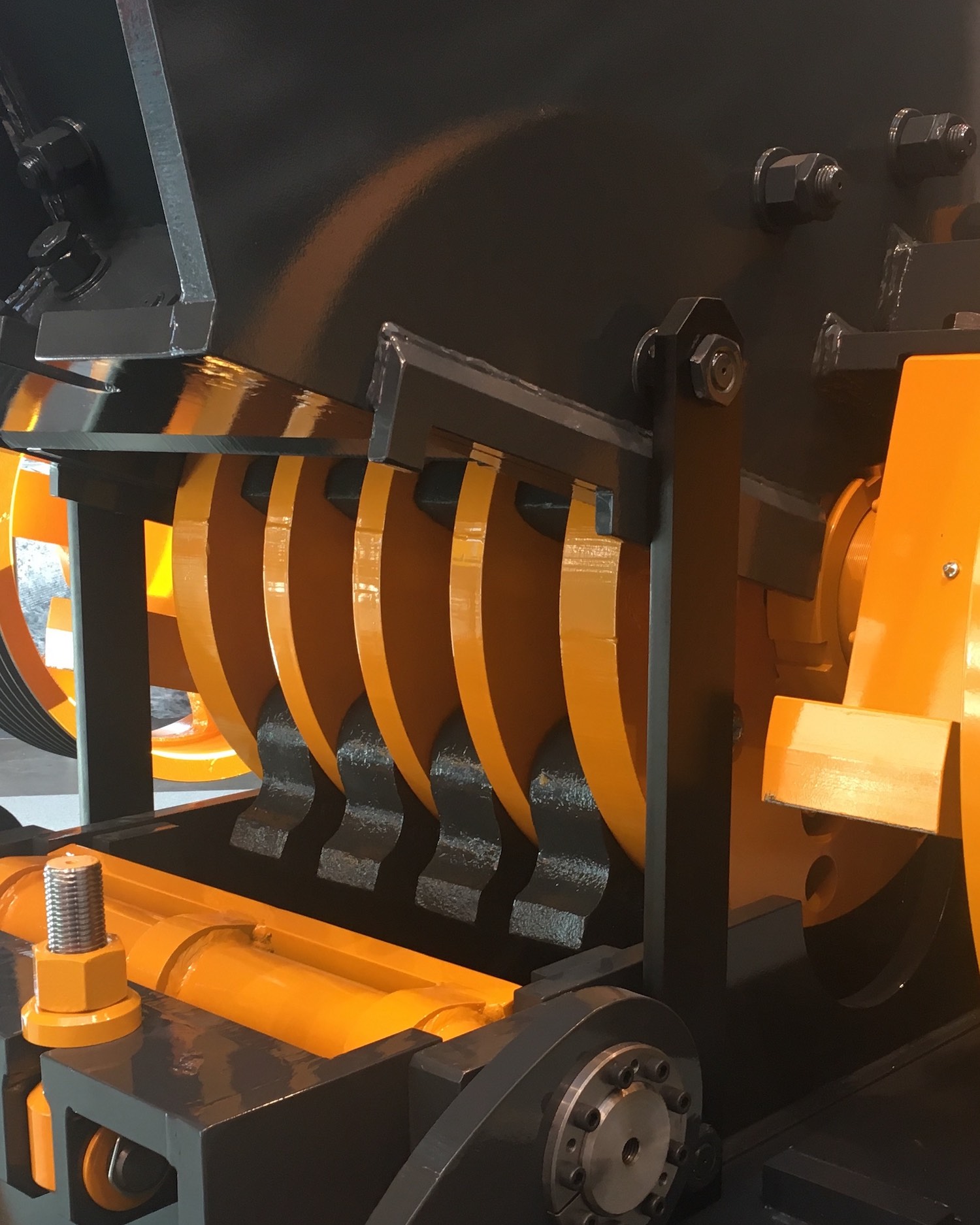


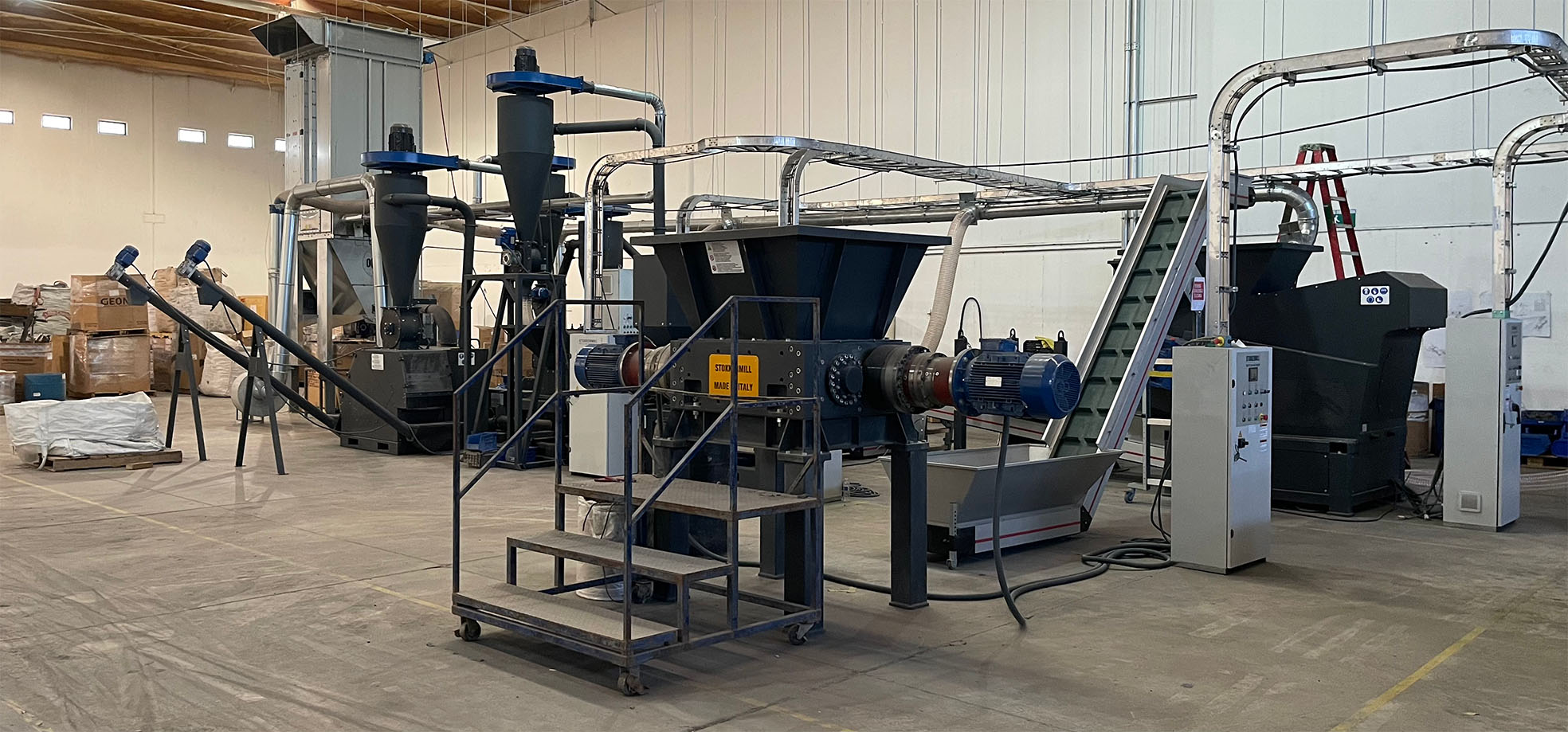


When it comes to cable recycling, it is easy to focus on the shredder’s ability to reduce the material. But in the most complex streams, shredding is only the beginning. The real difficulty comes afterwards: once the materials have been opened up, that mixture has to be turned into fractions separated well enough to be marketable. This is where the difference between a standard cable, a data cable, a capillary wire or a TECK cable becomes substantial, and where electrical cable recycling is truly decided by the quality of separation.
1. Recycling difficult cables: the problem starts after shredding
In cable recycling, shredding opens up the material but does not separate it. Copper, aluminum, plastic and other metals remain mixed in the same fraction. The value of recovery depends on what happens in the following stages: how well the conductor is liberated from the insulation and how precisely the different fractions are separated from one another.
2. There is no single “difficult cable”
The difficulties can have completely different origins:
- a thin cable contains little conductive material spread across a relatively large amount of insulation;
- a data cable may contain very fine conductors;
- an automotive wiring harness may combine different cross-sections, insulations and components;
- a TECK cable brings together, in the same product, different metallic materials that must be recovered separately.

That is why, in cable recycling, simply increasing shredding power does not automatically solve the problem. You need to understand which material must be liberated and which separation will have to take place afterwards.
3. Thin cables and data cables: when cable granulation is not enough
Data, telephone and capillary cables are a good example. After granulation, insufficient liberation can leave metal particles still attached to the plastic, with copper lost to the secondary fractions. The solution does not necessarily lie in using an ever-finer screen.
In Stokkermill configurations designed for the most complex streams, TURBO refiners can be installed after granulation to complete the liberation of the material. The principle is simple: first reduce. Then liberate. Finally, separate.
These three functions do not necessarily have to be performed at the same time or by the same machine. And it is precisely this distinction that makes it possible to adapt the copper recovery process to different materials.
4. TECK cable recycling: when separating plastic and metal is not enough
TECK cables are a different case again. Their multi-layer structure can include conductors, insulation, protective layers and metal armor. After size reduction, it is therefore not enough to obtain a generic “metal” fraction and a “plastic” fraction. Different metallic materials have to be distinguished and brought into fractions concentrated enough to be marketable.
The problem is no longer just liberating the metal from the insulation. It is correctly separating what has been liberated. And this is where more precise separation systems come into play.
5. Density, air, magnetism: separating copper, plastic and metals
Once the materials have been liberated, there is no single physical principle that can solve every contamination:
- magnetic separation acts on the ferrous fractions;
- air separation, for example with Zig-Zag separators, exploits the different behavior of particles within an air flow;
- density separation, with precision density tables, works on differences in specific gravity.
In the most complex streams, further refining and sorting systems can be integrated. The configuration therefore depends on the problem to be solved, not on the need to add as many machines as possible.
6. Not all cables require the same recycling process
This is a fundamental point. A relatively uniform batch of standard cables can be processed with a relatively simple configuration. A stream made up of data cables, capillary wires, automotive harnesses, armored cables and different contaminants, on the other hand, requires a more complex process.
There is therefore no universally correct sequence. There is a correct configuration for that specific input and that output target. A cable recycling line can include:
- size reduction;
- magnetic separation;
- granulation;
- refining;
- air separation;
- density separation;
- further technologies, where required by the composition of the material.
7. Cable recycling facilities: output quality changes the line design
Sizing a cable recycling facility should not start solely from the question: “How many pounds per hour (kg/h) does it need to process?” Throughput is essential, but on its own it does not describe the result. You also need to know:
- which cables will actually come in, and in what proportion;
- which contaminants are present;
- how much conductive material they contain;
- which particle size you want to achieve;
- what level of contamination is acceptable;
- what the industrial destination of the recovered fractions is.
Only at this point does production capacity take on real meaning. A plant that processes thousands of pounds per hour but loses copper or aluminum to the secondary fractions is not necessarily more efficient than one with a lower nominal throughput. Once again, purity and recovery must be read together.
8. Not one machine for every cable
The answer to input variability is not to design a different machine for every type of cable. It is to build a platform in which the different recycling machines can be integrated and configured according to the material. For some streams, a few steps are enough. For others, TURBO refining, air separation, multiple density stages or systems dedicated to specific metal fractions become necessary.
This modularity becomes particularly important when different batches are processed in the same plant during the week. The recycler’s raw material does not come from a perfectly standardized production line. It comes from the market. And the market changes.
9. From input to output: at ECOMONDO 2026 we start from the input
The principle behind plant design should therefore be simple: INPUT → PROCESS → OUTPUT. First, analyze what comes in. Then define the stages needed to liberate and separate the materials. Finally, check whether what comes out meets the characteristics required by the destination market.
Reversing this logic and starting from a standard machine means adapting the material to the plant. We prefer to do the opposite: adapt the process to the real material.
At ECOMONDO 2026, November 3–6 in Rimini, Italy, this will be one of the cable recycling topics we will discuss with recyclers. We won’t be starting from the question: “Which machine do you want?” The more useful question is: “Which material do you need to process, and which material do you want to obtain?” The plant configuration lies between these two answers.
10. Frequently asked questions
Can data and capillary cables be processed together with standard cables on a cable recycling line?
It depends on the composition of the batch and the configuration of the line. Integrating refining stages makes it possible to handle even very fine conductors without necessarily treating each type as a completely separate process.
Why are TECK cables more complex to recycle?
Because their structure can include several materials and different metal fractions, including armor. After liberation, it is therefore not enough to separate metal and plastic generically: the recovered metals may need to be further distinguished.
What is the TURBO refiner used for in cable recycling?
It is a refining stage used to complete the liberation of materials after the initial size reduction, preparing the fraction for the subsequent separation of copper and plastic.
Do all cable recycling facilities need TURBO, Zig-Zag and multiple density separators?
No. Each technology should only be included when the material and the required output make it necessary.
How do you correctly size an electrical cable recycling facility?
By starting from the real input: cable types, composition, contaminants, available quantities and the characteristics required for the recovered fractions.
When recovering copper from cables, is purity or recovery more important?
They cannot be assessed separately. An extremely pure fraction can hide significant material losses in the other outputs. The real quality of the process depends on the balance between recovery, purity, operating costs and downstream market specs.
10/12/2026