


We develop the best technologies for recycling materials to find innovative solutions for the energy and ecological transition
STOKKERMILL | SELTEK SRL © 2023 | P. Iva. IT02360630301 | Privacy | Terms







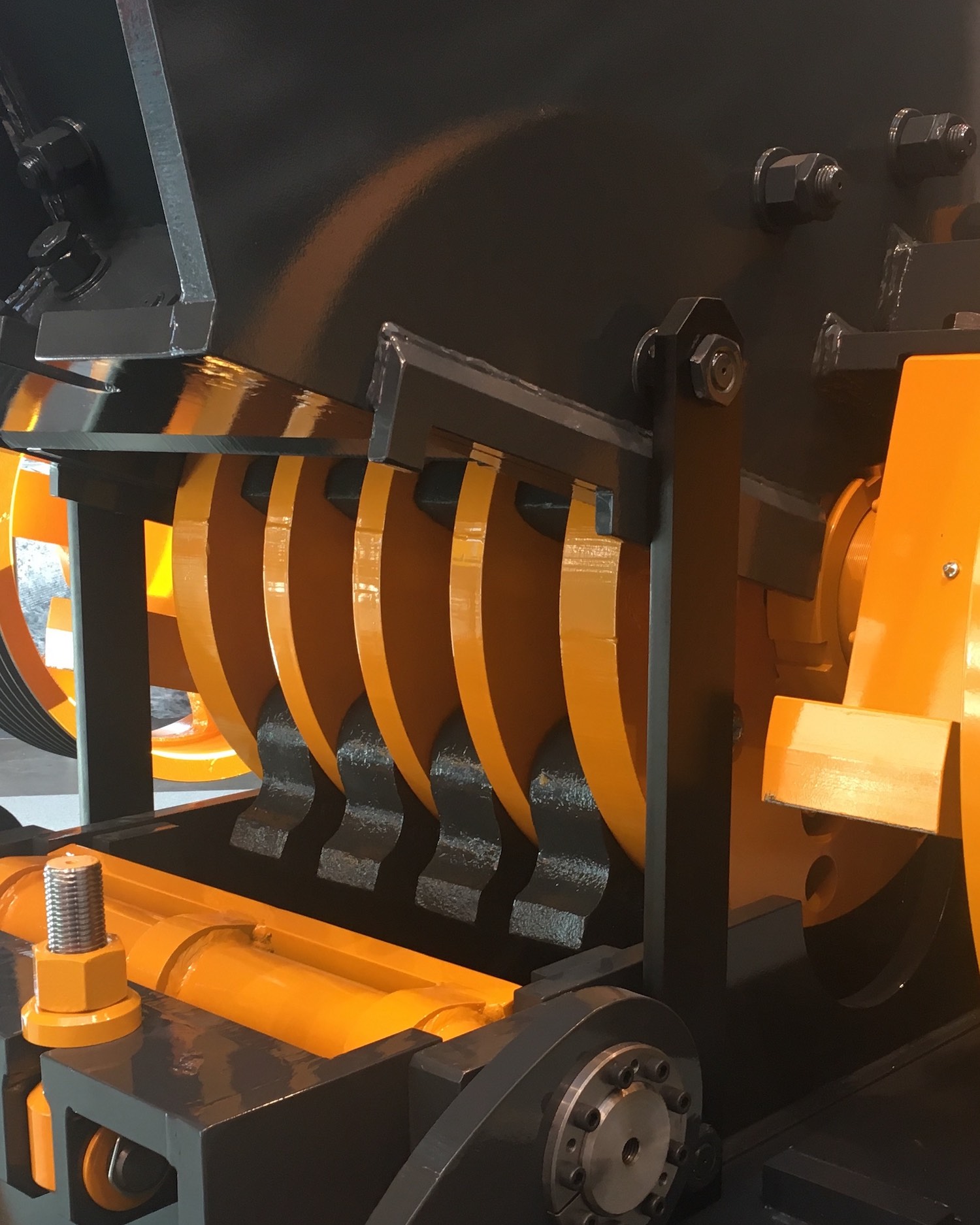


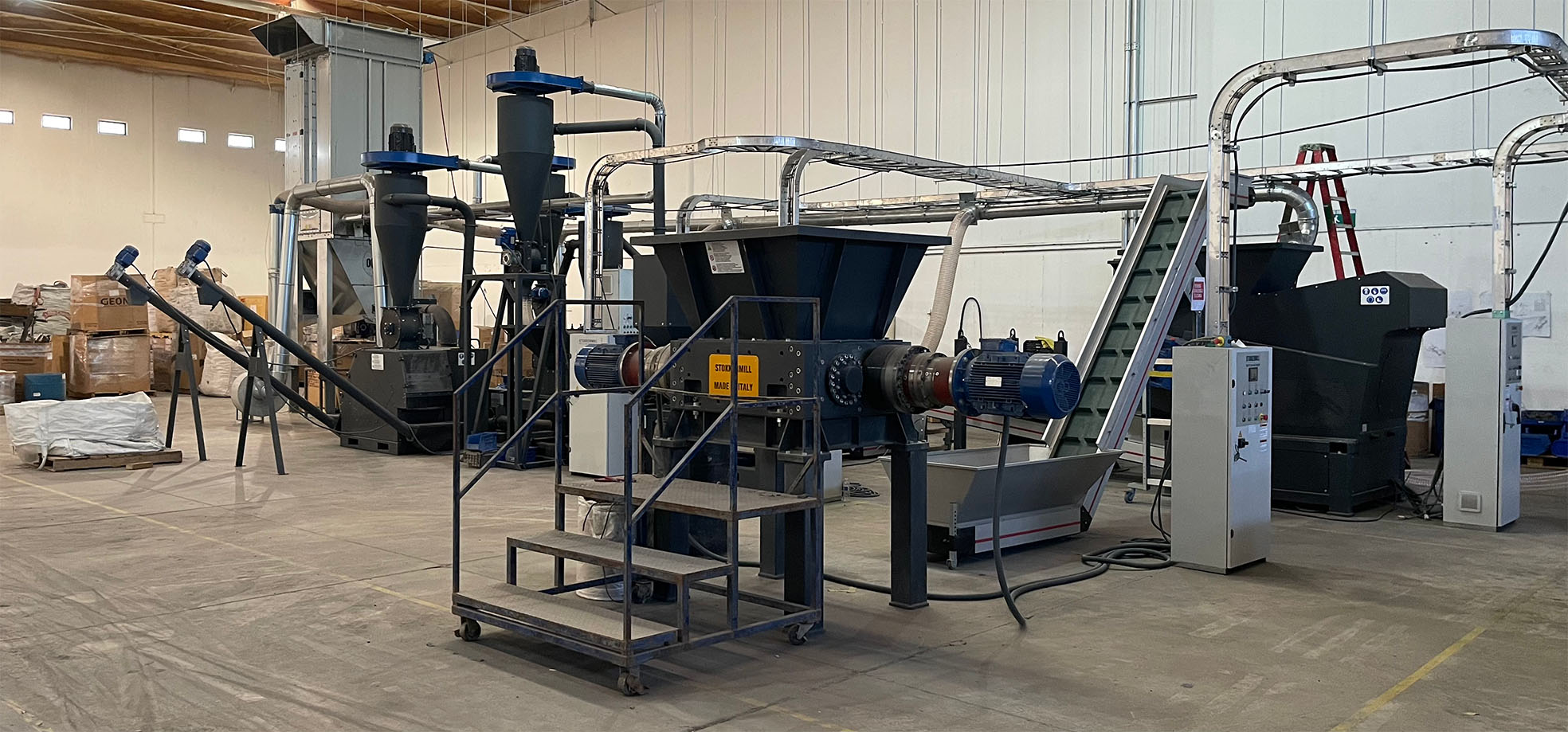

When buyers evaluate industrial recycling equipment in the United States, they typically focus on technical specifications: processing capacity, installed power, separation efficiency, and throughput rates. These numbers matter, but they don’t tell you what happens after 12 months of continuous operation in a real-world recycling facility—where bearing fatigue, structural vibration, and surface corrosion begin to expose the true build quality of the machine.
At Stokkermill, we have been designing and manufacturing industrial recycling machinery for more than 30 years. Every photovoltaic panel recycling line, every e-waste (WEEE) processing system, every shredder, and every separation plant we deliver is built through a fully integrated, controlled process: from the first engineering drawing to final factory testing before shipment.
This article explains how that process works—and why it directly impacts long-term performance and reliability.
“Made in Italy” is a label. In practice, its meaning depends entirely on what happens inside the manufacturing facility.
At Stokkermill, it means every critical component of every machine is designed, machined, fabricated, and assembled in-house by our own team. We do not outsource rotating assemblies, structural steel fabrication, or surface treatments to third-party suppliers. The same engineers who design the equipment also oversee production and provide field support after installation in the U.S. and worldwide.
This level of vertical integration is not common in the recycling equipment industry. It requires continuous investment in skilled labor, precision machining equipment, and strict production control. But it eliminates the variability that comes with outsourced manufacturing.
When a machine leaves our facility, we know exactly what’s inside it—because we built every component ourselves.
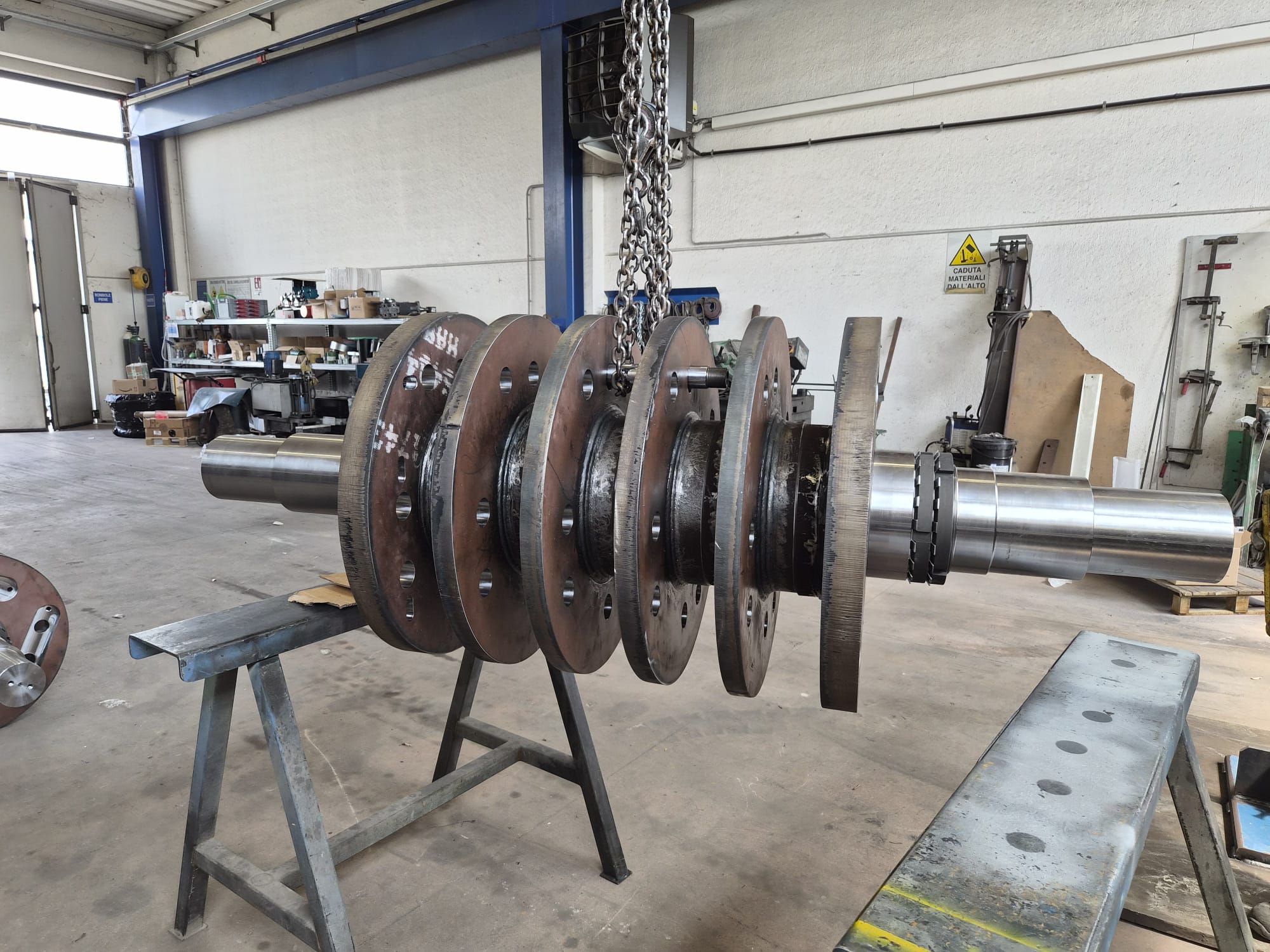
The most heavily stressed components in any recycling system are the rotating ones: rotors, shafts, and bearing housings. These parts operate under high dynamic loads, in continuous duty cycles, often for thousands of hours, and must maintain tight dimensional accuracy throughout their service life.
At Stokkermill, all critical rotating components are machined in-house using precision equipment, with tolerances measured in hundredths of a millimeter. Bearing seats are ground to high-precision finishes, and hub and disc interfaces are machined to ensure proper, controlled fits. Every component is dimensionally inspected before assembly.
In the recycling industry, the consequences of poor machining are well known: out-of-tolerance bearing seats lead to premature bearing failure, while unbalanced rotors create vibration, noise, and accelerated wear across the entire system. These are among the leading causes of unplanned downtime and high maintenance costs in recycling plants across the U.S.
We eliminate these risks before the machine ever leaves our production floor.
.jpeg)
There is a detail most buyers rarely ask about, yet it clearly separates long-life equipment from low-cost, price-driven designs: surface preparation of structural steel.
Not all manufacturers shot blast their structures before painting. At Stokkermill, we do—on every frame, housing, and structural component.
Freshly fabricated steel is covered in mill scale, welding oxides, and surface contaminants. If paint is applied directly, it bonds to that contamination layer instead of the steel itself. When that layer inevitably fails in harsh recycling environments—dust, moisture, abrasion, and chemical exposure—the coating delaminates, and corrosion begins beneath the surface.
Shot blasting removes all contaminants down to clean bare metal and creates a controlled surface profile that allows industrial coatings to mechanically bond to the steel. The result is a significantly more durable finish, resistant to impact, moisture intrusion, and chemical exposure.
Every Stokkermill structure is blast-cleaned to industrial standards before any coating is applied. It costs more. It takes longer. We do it anyway.
Every Stokkermill machine starts the same way: not with a brochure or a 3D rendering, but with steel, welds, and decades of hands-on experience in industrial recycling applications.
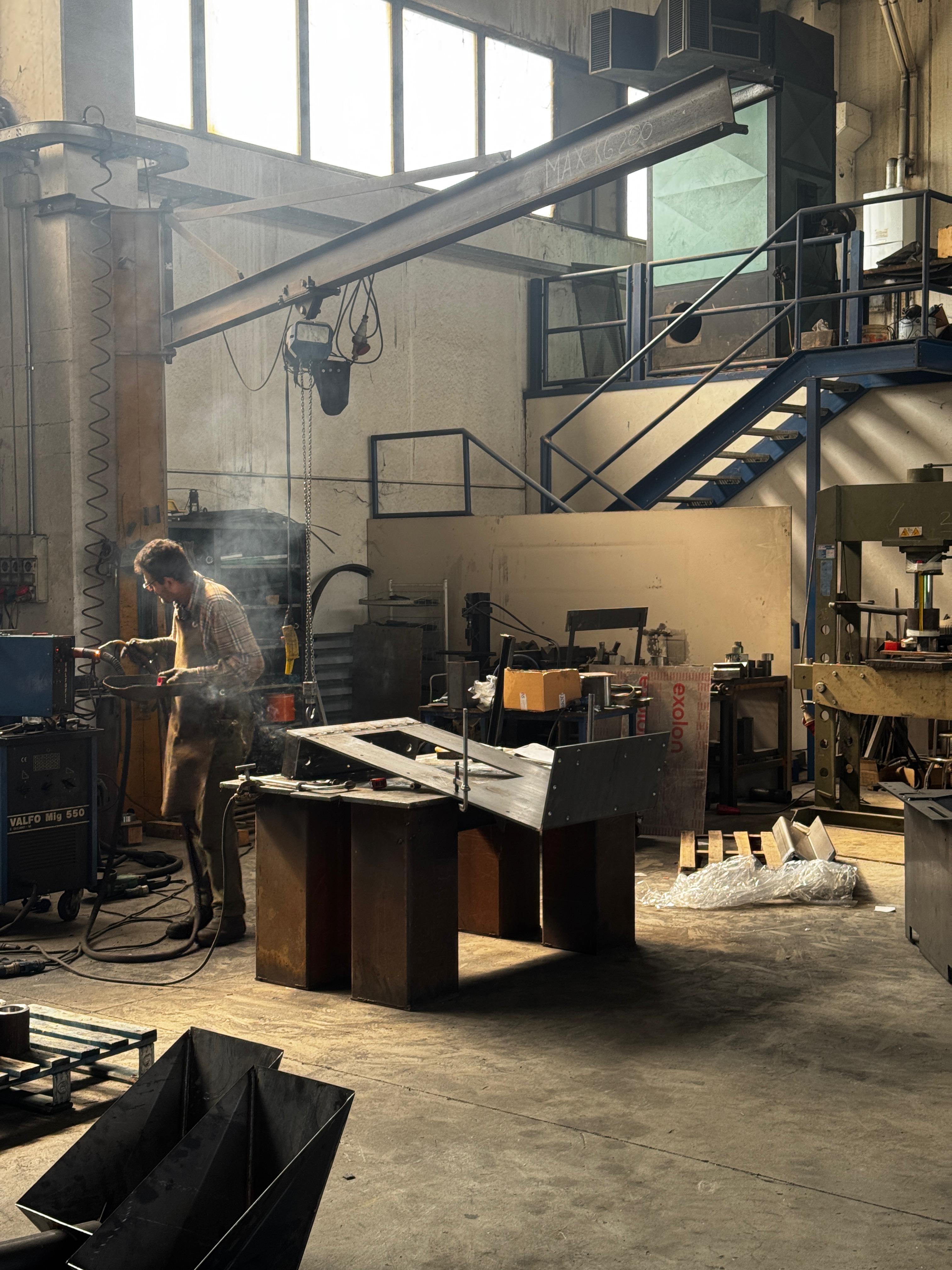
On our production floor, all structural fabrication takes place in-house: steel frames are cut, bent, and welded according to engineering drawings; hoppers, housings, and conveyors are fabricated to precise geometries; and complete assemblies are built on precision fixtures that maintain dimensional accuracy throughout welding and assembly.
Our welders operate under qualified welding procedures that define preheat requirements, interpass temperatures, and filler material specifications. Because the mechanical properties of a weld are not determined afterward—they are defined during the welding process itself.
Stokkermill — Engineering recycling solutions. Made in Italy.
14/05/2026