


We develop the best technologies for recycling materials to find innovative solutions for the energy and ecological transition
STOKKERMILL | SELTEK SRL © 2023 | P. Iva. IT02360630301 | Privacy | Terms










Electric and hybrid vehicles are changing our roads, but behind the scenes there's a question the recycling industry is asking itself more and more often: what happens when a high-voltage battery reaches the end of its life, or fails?
The numbers speak for themselves: over the next few years, the volume of automotive lithium HV battery packs to be processed across Europe is set to grow substantially, in step with the electric vehicles sold over the last 10-15 years. For recycling and waste treatment plants, this points to a single goal: equipping themselves with solutions capable of safely handling growing volumes of lithium batteries from electric and hybrid vehicles, without slowing down the workflow and without taking on risk.
That's where a system engineered specifically for this purpose comes in: a plant that discharges and disassembles HV batteries in complete safety, minimizing fire risk and returning material ready for the next stages of recycling.

System for the treatment and discharge of lithium HV batteries for electric and hybrid vehicles
Before a battery at end of life can even be disassembled, there's a mandatory step: bringing it down to 0 volts. A charged HV battery, in fact, remains a potentially hazardous component until it has been fully discharged.
The system handles exactly this task, using a high-power electronic load (1000 Vdc / 80 A) that discharges the battery in a controlled way. But what's really interesting is how it does it:
All of this is managed from a simple 10" touchscreen terminal, from which the operator sets the discharge current and monitors the entire process in real time.
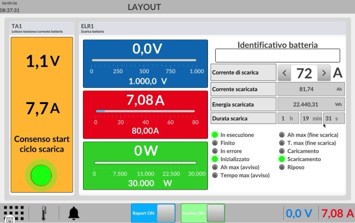
Discharge control screen: voltage, current, and energy discharged in real time
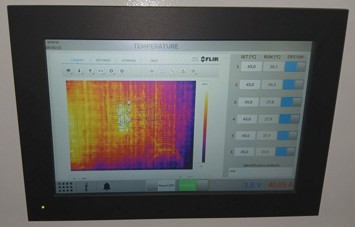
Real-time thermal monitoring via infrared thermal camera, 6 measurement points
Once discharged, the automotive lithium battery is ready to be disassembled. But "safe" doesn't mean "harmless": a large high-voltage battery (often over 440 lbs) can still hide hazards, first and foremost thermal runaway — the phenomenon where a lithium battery, in the event of a short circuit or overheating, can catch fire.
For this reason, the disassembly table isn't just a workbench: it's built on a frame suspended above a cooling tank. If the battery's temperature exceeds 154°F, the system automatically drops it into water, stopping the fire risk before it can start.
Release into the tank can happen in two ways:
Here too, the frame is designed to work in parallel on multiple fronts: three independent stations allow several batteries to be disassembled at the same time, without the cycles getting in each other's way. And once a faulty battery has triggered the safety system, the table can be moved and stored outside in complete safety, pending removal.
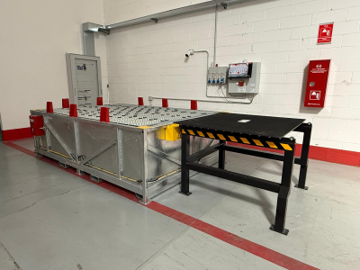
HV battery disassembly table with anti-fire cooling tank
As the number of electric and hybrid vehicles reaching end of life grows year after year, recycling plants will have to handle ever-increasing volumes of HV batteries. Having a dedicated line for safe discharge and disassembly is no longer just a technical detail — it's become a genuine structural requirement for anyone working in this industry:
A system designed to grow alongside the automotive lithium battery treatment and recycling market, with no compromise on safety and efficiency.
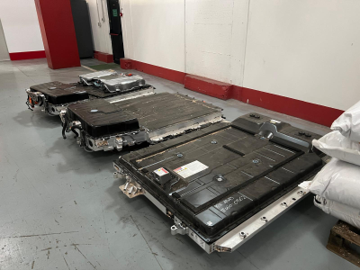
End-of-life automotive lithium HV battery packs ready for recycling treatment
Reference technical document: Seltek S.r.l. Technical and performance data are indicative and may vary depending on conditions of use; please refer to the relevant commercial quote for final contractual terms.
09/08/2026